Category: education

  • The Role of Creativity in STEM Education

    The Role of Creativity in STEM Education

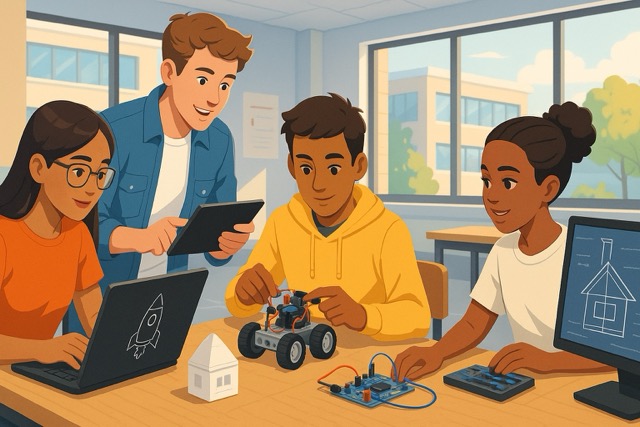
    When you teach STEM—whether it’s in a classroom, a lab, or a training center—you’re not just delivering equations or formulas. You’re preparing students to adapt, solve problems, and innovate in a world that constantly changes. And that’s where creativity becomes a necessity, not a bonus. STEM without creativity produces routine thinkers; STEM with creativity produces inventors, coders, scientists, and engineers who make things better. In this article, you’ll explore how creativity influences outcomes in STEM education, how it fuels engagement and critical thinking, and how to practically foster it without derailing standards or learning goals.

    Creativity Isn’t a Distraction—It’s the Accelerator

    In traditional models, creativity is often boxed into art classes while STEM is treated as strictly technical. That separation holds students back. When you integrate creativity into your STEM teaching, students stop memorizing and start exploring. They learn to ask “what if?” and follow through. That mindset—curious, adaptable, and fearless—is what drives breakthroughs in real-world science and engineering.

    You’ve likely seen this in practice. When students are allowed to design their own models or test unconventional hypotheses, they engage more deeply with the material. The concepts stick because they’ve applied them in original, self-guided ways. That’s not only retention—it’s transformation.

    How Creativity Strengthens Problem-Solving Skills

    Real-world problems rarely have one correct answer. So when you train students to solve problems creatively, you give them a competitive edge. Instead of memorizing a method, they learn to analyze variables, test alternatives, and pivot when something fails. This kind of thinking is essential in fields like robotics, software engineering, environmental science, and biomedicine.

    Encouraging students to brainstorm multiple solutions to a single problem also sharpens their ability to compare trade-offs—an essential part of engineering and research work. Whether it’s optimizing a code algorithm or designing a water purification system, the best results usually come from the most flexible thinkers.

    Engagement Goes Up When Students Take Ownership

    Creativity turns passive learners into active participants. When students have room to invent, tinker, or present projects in their own way, they’re far more invested. You’ve probably had students who were quiet during lectures but lit up when asked to design a prototype or animate a simulation. Those moments unlock potential that rigid assignments often overlook.

    You can see this most clearly in project-based learning environments. Whether it’s a student-led experiment or a group capstone project, giving learners control over the process encourages resilience, resourcefulness, and teamwork. These aren’t soft skills—they’re core to success in any STEM field.

    Cross-Disciplinary Thinking Is the Future of Innovation

    The most exciting advances today happen where disciplines collide. Think of wearable health tech, which combines biology, materials science, and engineering with UX design. Or think of climate modeling, which pulls from math, programming, meteorology, and ethics. These intersections are where your students will live and work—and creativity is what makes those connections possible.

    By introducing creative prompts and interdisciplinary challenges, you help students build a more connected understanding of what STEM actually looks like beyond the textbook. That kind of thinking prepares them not just to succeed in college or careers, but to lead in them.

    Practical Ways to Bring Creativity Into STEM Teaching

    You don’t need to overhaul your syllabus to make room for creativity. Start by reframing how you ask questions. Replace “solve this equation” with “how many ways can you model this scenario?” Instead of assigning the same lab to every student, offer multiple inquiry paths that let them choose their tools or experiment variables.

    You can also bring creativity in through design-thinking challenges, open-ended coding tasks, 3D modeling software, or low-cost maker kits. Even a simple sketching session before a robotics build helps students visualize ideas and think critically. The goal isn’t to decorate science—it’s to deepen it through engagement.

    Technology Helps, But It’s Not Required

    Yes, 3D printers, VR simulations, and AI tools are great for creative STEM instruction. But don’t let a lack of resources hold you back. Whiteboards, cardboard, recycled parts, and basic electronics can yield just as much ingenuity. What matters is how you frame the challenge and how much freedom you give your students to explore.

    In fact, constraints often boost creativity. When students don’t have expensive materials, they’re forced to think differently—to reuse, reconfigure, or invent alternatives. That’s a valuable skill in real-world science, where budget and time are always limited.

    Assessment Can Support Creativity Without Sacrificing Rigor

    One of the biggest concerns you might face is how to assess creativity in a way that still meets your curriculum standards. It’s possible—and actually pretty straightforward. Focus on evaluating the process, not just the final answer. Are students using logical reasoning? Are they testing assumptions, documenting results, reflecting on what didn’t work?

    You can also use rubrics that score creative problem-solving, originality, collaboration, and application of STEM principles. When students know their creative thinking is part of their grade—not just their accuracy—they’re more likely to invest in both.

    Creative Thinking in STEM Education Looks Like This

    • Open-ended problem-solving with multiple solutions
    • Hands-on projects combining tech, math, and art
    • Student-designed models or experiments
    • Brainstorming sessions followed by prototyping
    • Real-world challenges requiring original thinking

    You’re Not Just Teaching Science—You’re Shaping Innovators

    When you make room for creativity in your STEM classroom, you’re doing more than improving test scores. You’re giving students the tools to imagine, build, and question. You’re preparing them for fields that haven’t been invented yet, using technologies we can’t fully predict. Creative thinkers build the future—and it starts with how you teach today.

    For additional thoughts and perspectives on education and innovation, you’re welcome to connect with me on Substack.

  • The Future of Digital Media: Trends and Opportunities for Students

    The Future of Digital Media: Trends and Opportunities for Students

    As digital media continues to evolve, its impact on various industries, including marketing, entertainment, and education, is growing rapidly. For students looking to enter the digital media field, the future holds exciting opportunities but also presents challenges that will require adaptability and a forward-thinking mindset. As media consumption habits change and new technologies emerge, students must be prepared to navigate this dynamic landscape. In this article, we’ll explore the key trends shaping the future of digital media and the opportunities available to students entering the field.

    The Dominance of Short-Form Video Content

    Short-form video content is leading the charge in digital media consumption. Platforms like TikTok, YouTube Shorts, and Instagram Reels have transformed how audiences engage with content, favoring quick, snackable videos over longer forms of media. This trend has reshaped the content creation space, especially for younger audiences who prefer short, engaging videos that they can easily consume on mobile devices​.

    For students, the rise of short-form content presents numerous opportunities to build skills in video editing, storytelling, and social media strategy. Digital media careers will increasingly require an understanding of how to create content that captures attention quickly and delivers messages concisely. Additionally, as platforms continuously adjust their algorithms to prioritize engagement, students must stay updated on the latest trends and best practices for optimizing their content.

    However, while short-form videos are immensely popular, they require a strong ability to stand out in a crowded space. This requires creativity, adaptability, and strategic thinking to ensure that content resonates with the intended audience and leads to meaningful engagement​.

    AI and Automation Transforming Digital Media

    Artificial intelligence (AI) is no longer just a buzzword in digital media—it’s reshaping the industry in profound ways. From content personalization and chatbots to predictive analytics and automated video editing, AI is enhancing how media is produced and consumed. AI tools are making it easier to tailor content to specific audience preferences by analyzing user data and predicting which types of media will perform best​.

    For students entering the digital media space, gaining proficiency in AI tools is becoming a necessity. AI can assist in creating more engaging and relevant content, allowing media professionals to work smarter, not harder. Understanding how to use AI to improve customer experience, personalize marketing efforts, and optimize media production workflows can set students apart in a competitive job market.

    However, the increasing reliance on AI also raises questions about automation replacing creative jobs. While AI can automate certain tasks, human creativity remains irreplaceable. Students who can balance AI’s efficiency with human innovation will be well-positioned for future careers​.

    The Podcast and Audio Content Boom

    The popularity of podcasts and other audio-based content continues to soar, offering new avenues for students interested in storytelling, journalism, and digital marketing. As podcasting platforms like Spotify, Apple Podcasts, and Google Podcasts expand their reach, the medium has become a crucial tool for brands looking to connect with audiences in an authentic and engaging way​.

    Students interested in digital media careers should explore the growing demand for podcast production, editing, and marketing. Whether it’s developing a podcast series for a brand or producing independent content, the skills required to succeed in this space—such as audio editing, voice talent, and marketing strategy—are becoming increasingly valuable.

    In addition to podcasting, audio content extends to emerging fields such as voice search optimization and voice-based AI assistants, which are becoming important channels for brand communication. This presents even more opportunities for students to explore roles related to voice content creation, technical development, and marketing.

    User-Generated Content and the Creator Economy

    The rise of user-generated content (UGC) and the explosion of the creator economy are reshaping how brands engage with audiences. Platforms like TikTok, Instagram, and YouTube empower everyday users to create content, leading to a new wave of influencers and micro-influencers who wield significant influence over their followers. Brands are increasingly partnering with these creators to promote their products in a more authentic and relatable manner​.

    For students, understanding how to leverage UGC and the creator economy is crucial. Whether aspiring to be a content creator or pursuing a role in digital marketing, knowing how to build and manage relationships with influencers will be key to success. Additionally, the skills needed to create engaging, authentic content that resonates with audiences will continue to be in high demand.

    Furthermore, with the growing emphasis on authenticity in digital media, students must develop an understanding of how to cultivate trust and transparency in their content. Audiences are increasingly skeptical of traditional advertising, making UGC and influencer partnerships a powerful way to build genuine connections​.

    Social Media: Beyond Marketing

    Social media has long been a pillar of digital marketing, but its role is expanding far beyond traditional promotion. Platforms like Instagram, LinkedIn, and Twitter are now integral to customer service, community building, and social commerce. Brands are using these platforms to foster communities, offer personalized customer support, and directly sell products through features like Instagram Shopping​.

    For students, social media literacy is no longer just about crafting posts or running ad campaigns; it’s about understanding how these platforms can be used to drive long-term engagement and brand loyalty. Students should focus on mastering social media’s evolving features, such as live streaming, social commerce, and private messaging, as these elements are becoming essential tools for brands to interact with customers in real-time​.

    Moreover, emerging platforms like Clubhouse and Discord demonstrate that social media is evolving into new, more interactive forms. Students who keep up with these shifts will be better prepared to take advantage of new opportunities as they arise.

    The Future of Immersive Media: AR and VR

    The future of digital media is moving towards immersive experiences through technologies like augmented reality (AR) and virtual reality (VR). Brands and content creators are beginning to experiment with immersive media to deliver more engaging and interactive experiences, particularly in the entertainment, retail, and education sectors​.

    For students, developing skills in AR/VR production can open doors to new and exciting careers. From virtual showrooms in retail to immersive storytelling experiences in gaming and education, the demand for AR and VR content is expected to grow. As these technologies become more accessible, students who can create compelling AR/VR experiences will find themselves in high demand.

    However, AR/VR is still in its early stages of mainstream adoption. This means there’s plenty of room for innovation, and students entering the field can be pioneers in shaping how these technologies are used in digital media​.

    Ethical Considerations and Privacy Challenges

    As digital media continues to evolve, so do the ethical and privacy challenges that come with it. With consumers becoming more aware of how their data is being used, there is increasing pressure on brands to be transparent and ethical in their practices. This presents both a challenge and an opportunity for students entering the field​.

    Students must understand the importance of data privacy laws, such as the General Data Protection Regulation (GDPR) in Europe, and how these laws affect digital marketing and content strategies. Additionally, there is a growing demand for ethical media creation, which ensures that content is effective and respects the audience’s privacy and preferences.

    Mastering the balance between personalization and privacy will be essential for students looking to build trust with audiences in the digital age. Ethical digital media practices are necessary from a legal perspective and contribute to long-term success by building trust with consumers​.

    Top Trends in Digital Media for Students

    • Short-form video dominates platforms like TikTok and Instagram.
    • AI and automation are transforming content creation and marketing.
    • Podcasts and audio content offer growing opportunities.
    • User-generated content drives engagement in the creator economy.
    • Immersive media, like AR and VR, shapes future storytelling.

    In Conclusion

    The future of digital media is full of exciting opportunities for students who are ready to embrace change, learn new skills, and adapt to emerging technologies. From the rise of short-form video content and the expansion of AI to the growing importance of immersive experiences, students have a wide array of paths to explore. By staying informed about the latest trends and continuously honing their skills, students can position themselves at the forefront of the digital media industry. The key is to remain adaptable, creative, and ready to seize new opportunities as they arise in this rapidly evolving field.