Category: Leadership & Personal Development

  • The Paradox of Speed: Why Slowing Down Makes You a Better Leader

    The Paradox of Speed: Why Slowing Down Makes You a Better Leader

    Slow leadership is the discipline of pausing long enough to think, listen, and choose the right move before speed turns into noise. You become a better leader when you stop treating urgency as proof of value and start using pace as a strategic choice.

    Your day can fill up fast: messages, meetings, decisions, escalations, and someone waiting for an answer before you’ve had time to understand the problem. By noon, you may have moved through dozens of tasks and still feel like you haven’t led with clarity. This article helps you separate useful speed from frantic motion, protect decision quality, and build trust without losing momentum.

    Why Are Leaders So Addicted To Speed?

    Leaders get addicted to speed because fast action often looks like competence from the outside. Quick replies, packed calendars, and constant availability can make you feel valuable, even when those habits weaken judgment.

    Modern leadership often rewards visible motion more than thoughtful direction. If you answer every message within minutes, jump into every meeting, and solve every issue yourself, people may read that as dedication. The problem is that visible busyness can hide poor prioritization. You can spend the whole day reacting and still avoid the work only you can do.

    This is where the busyness trap takes hold. You start confusing a full calendar with progress, and your team learns to treat every issue as urgent. Once that pattern forms, slowing down feels risky because silence gets mistaken for disengagement. In reality, space to think is part of the job, not a break from it.

    Speed also gives leaders a short-term emotional payoff. Making a quick call reduces tension for a moment, especially when people are waiting. Yet fast relief can create slower damage: rework, unclear priorities, weaker commitment, and decisions that need to be repaired later. Slow leadership helps you resist that reflex.

    Is Slowing Down A Sign Of Weakness In Leadership?

    No, slowing down is not weakness. Weak leadership avoids decisions; deliberate leadership slows the process just enough to make a better one.

    Your team can tell the difference between hesitation and discipline. Hesitation sounds vague, shifts responsibility, and leaves people guessing. Deliberate pacing sounds calm, names the decision, asks for missing facts, and sets a clear time to act. That kind of pause reduces confusion rather than creating it.

    Strong leaders don’t use slowness as a hiding place. They use it to separate signal from noise. When a customer issue, budget concern, or staffing problem lands on your desk, the fastest answer may not be the best answer. A short pause to clarify the real problem can prevent days of avoidable cleanup.

    Harvard Business Review’s research on Chief Executive Officers(CEOs) found that effective CEOs spend a meaningful share of their working time alone, including time for reflection, strategy, and renewal. That matters because leadership is not just public performance. Private thinking time shapes the quality of what you say, decide, and prioritize when everyone is watching.

    What Does Slow Leadership Look Like In Practice?

    Slow leadership looks like intentional pacing: you pause before reacting, listen before deciding, and protect time for work that needs full attention. It doesn’t mean moving slowly on everything.

    In practice, you stop treating every input as equal. A true emergency gets quick action. A strategic choice gets time, a clear decision owner, and the right voices in the room. A recurring problem gets diagnosis instead of another temporary fix.

    You also communicate your pace so people don’t fill the silence with worry. Say, “This decision matters, so you’ll have an answer by Thursday after finance and operations review the numbers.” That sentence tells your team you’re engaged, gives them a timeline, and explains why speed is being managed. You’re not disappearing; you’re leading the decision.

    Slow leadership also changes meetings. You reduce status theater, ask better questions, and leave room for dissent before a decision hardens. A slower meeting is not a longer meeting by default. It’s a cleaner meeting, with fewer assumptions and better follow-through.

    How Does Constant Urgency Affect Decision Quality?

    Constant urgency weakens decision quality by shrinking attention, increasing decision fatigue, and pushing leaders toward snap judgments. Over time, your team stops bringing thoughtful input because everything feels pre-decided.

    When every issue is urgent, your brain starts sorting for speed instead of accuracy. You lean on old patterns, familiar voices, and the easiest explanation. That can work for routine choices. It fails when the problem is new, cross-functional, or emotionally charged.

    Constant urgency also trains your team to escalate instead of solve. If you reward panic with instant executive attention, people learn to package every issue as a fire. Then your calendar becomes a queue of emergencies, many of which could have been handled with clearer priorities and decision rights. The faster you run, the more dependent the system becomes on your speed.

    Burnout adds another cost. Deloitte’s workplace burnout survey found that many respondents had experienced burnout in their current job, with pressure to do more at a faster pace among the concerns. When leaders normalize permanent urgency, employees don’t just lose energy. They lose trust that the organization knows how to choose.

    What Is The Difference Between Reactivity And Responsiveness?

    Reactivity is an automatic response to pressure. Responsiveness is a chosen response based on the situation, the facts, and the desired outcome.

    Reactive leaders move because something pushed them. They answer the loudest message, change direction after the latest complaint, and create whiplash for teams. Their speed feels energetic at first, then exhausting. People stop trusting priorities because priorities keep shifting.

    Responsive leaders still move fast when the situation calls for it. The difference is that they know why they’re moving fast. They ask what decision is needed, who should own it, what information is missing, and what the cost of delay looks like. That small pause turns speed into judgment.

    A useful test is simple: ask, “Am I acting to reduce discomfort, or am I acting to improve the outcome?” If the answer is discomfort, pause. If the answer is outcome, act with clarity. This is how strategic slowness protects momentum instead of draining it.

    How Did Satya Nadella Use Slower Leadership At Microsoft?

    Satya Nadella’s leadership at Microsoft shows how slowing down conversations can strengthen execution. His shift from a “know-it-all” culture to a “learn-it-all” culture placed listening, curiosity, and reflection at the center of performance.

    A know-it-all culture rewards the fastest answer in the room. People defend expertise, protect status, and rush to prove they’re right. A learn-it-all culture changes the pace of discussion. It gives people room to ask, test, admit gaps, and learn from customers and colleagues.

    That type of cultural reset does not mean lowering standards. It means changing how high standards are reached. When leaders slow down enough to listen, they find risks earlier, reduce internal friction, and give teams more ownership. The organization can then move with more alignment because people understand the reason behind the direction.

    For you, the lesson is practical. You don’t need to copy another leader’s style. You can start by changing the speed of your own conversations: ask one more question before giving direction, invite the quietest expert to speak, and make learning safer than posturing. That’s slow leadership in a form your team can feel.

    How Do You Convince Your Team That Slowing Down Helps?

    You convince your team by defining where speed matters and where thought matters. People accept a slower pace when they can see that it reduces rework, confusion, and preventable mistakes.

    Start by naming the problem without blaming the team. Say that too many issues are being treated as urgent, and that the group needs a better way to sort decisions. Then create simple categories: act now, decide today, review this week, schedule for strategy. The categories give people language for pace.

    You also need to show that slowing down does not mean endless discussion. Set deadlines for decisions, assign owners, and make the reasoning visible. If people see that a pause leads to a cleaner decision, they’ll trust the pause. If they see pauses turn into drift, they’ll resist them.

    Measure the cost of haste where you can. Track repeated escalations, late reversals, unclear handoffs, and meetings created to fix earlier meetings. Those patterns help your team see that speed has a price. Once that price is visible, strategic slowness feels less like a luxury and more like operational hygiene.

    Can You Decelerate Without Losing Momentum?

    Yes, you can decelerate without losing momentum by slowing the right parts of leadership. Protect thinking time, improve decision flow, and create recovery cycles so speed remains available when it counts.

    Protect decision-quality time. Put private thinking blocks on your calendar and treat them as leadership work. Use that time to review priorities, prepare for hard conversations, and decide what deserves your attention. Harvard Business Review’s CEO time-use research supports the idea that time alone is part of effective executive work, not an indulgence.

    Build a pause into important decisions. Before approving a major choice, ask what information is missing, who will be affected, and what happens if the decision is wrong. This does not need to take weeks. Many decisions improve with a short, structured pause. The point is not delay; the point is better judgment.

    Manage energy, not just time. The Energy Project’s work and related writing on renewal make a practical point for leaders: people don’t perform well as machines. Focus rises and falls. Short recovery periods, fewer back-to-back meetings, and protected deep work help you preserve attention for the calls that matter. A tired leader can still look busy, but the quality drops.

    What Is The Paradox Of Speed In Leadership?

    • Slow down to make better decisions.
    • Listen before acting.
    • Protect time for reflection.
    • Reduce urgency that drains teams.

    Lead At The Pace Your Work Deserves

    The paradox of speed is that constant haste often slows the work that matters most. You lose time through rework, vague priorities, strained trust, and decisions made before the real issue is visible. Slow leadership gives you a better rhythm: fast when the matter is simple or urgent, slower when the cost of being wrong is high. Your team does not need you to be frantic to prove commitment. They need you to set a pace that protects clarity, energy, and judgment.


    References

  • Hacking Habits: Using AI to Build and Break Habits for Personal Growth

    Hacking Habits: Using AI to Build and Break Habits for Personal Growth

    You can build and break habits using AI tools that adapt to your daily rhythms, surface blind spots, and deliver nudges at the moments you actually need them. Unlike static trackers, AI-powered systems can learn when you lapse, what derails you, and which small changes compound. The catch is that the underlying timelines are far longer than most tools imply — the best real-world evidence puts the median at around 66 days, with a range stretching to 254.

    For founders, this matters more than most. Your schedule shifts hourly, your energy fluctuates unpredictably, and the cost of inconsistency — missed workouts, skipped strategic reviews, reactive communication — ripples through the whole company. Advice like “just be disciplined” ignores the structural reality of building a business. AI habit systems address that gap by working with your chaos rather than demanding you eliminate it.

    The question is no longer whether AI can help you change your behaviour. It is which approach fits your situation, and what the trade-offs look like once the novelty wears off.

    A checklist on a clipboard with a pen resting on top, representing structured habit tracking and daily progress measurement
    Structured tracking is the foundation of habit change. Photo: Glenn Carstens-Peters / Unsplash

    What Does AI Habit Coaching Actually Look Like?

    AI habit coaching blends behavioural science frameworks with software that adapts to your patterns. When you miss a morning meditation streak, a static app sends a generic “don’t give up!” notification. A context-aware system looks at why you missed it — your calendar shows back-to-back meetings every Tuesday before 10am — and suggests shifting to your lunch break on those days.

    Two frameworks underpin most of these tools, and they are routinely conflated. BJ Fogg, the Stanford behaviour scientist who founded the Behavior Design Lab, has drawn the distinction himself: Behavior Design is the overall system, applicable to any behaviour challenge, while Tiny Habits is a specific method built for one purpose — creating habits.

    BJ Fogg distinguishing Behavior Design from the Tiny Habits method. The difference matters when evaluating tools: most apps implement the narrow method while marketing the broad system.

    That distinction is a useful buying filter. If a tool only records streaks, it is a diary. If it helps you redesign the behaviour — changing the prompt, lowering the difficulty, adapting when your environment shifts — it is doing the work Fogg’s model describes. Choose tools that make the behaviour easier to repeat, not tools that make the failure easier to count.

    This context-aware approach is a real shift from first-generation apps like Streaks or Habitica, which rely on manual logging and static reminders. Modern tools analyse calendar data, sleep patterns from wearables, and app usage to build a picture of your actual day rather than the idealised version you wrote down in January.

    Consider a practical example. A founder sets a goal to journal for ten minutes each morning. On paper this is straightforward. In practice, weeks with early investor calls or late-night incidents blow through the plan, and the broken streak triggers what behavioural scientists call the “what-the-hell effect” — abandoning an entire goal after a single failure. A system that notices the correlation between disrupted sleep and skipped journaling can offer a compressed two-minute format on those days. The habit survives because the system flexes instead of breaking.

    There is good evidence this is the right target. In the Lally et al. study, missing a single opportunity to perform the behaviour did not materially affect habit formation. What matters is the difference between a normal miss and a pattern of disengagement — and distinguishing those two is precisely what pattern-recognition software is good at.

    The Data Behind Habit Formation Timelines

    The popular “21 days to form a habit” claim traces back to a misreading of Maxwell Maltz’s 1960s observations about plastic surgery patients adjusting to new faces. It was never a habit-formation study. The actual research tells a much less convenient story.

    Lally and colleagues at University College London recruited 96 volunteers who each chose an eating, drinking, or activity behaviour to perform daily in a consistent context for twelve weeks, completing a self-report habit index each day. Eighty-two provided enough data for analysis; the asymptotic model fitted 62 individuals, of whom 39 showed a good fit. The time taken to reach 95 per cent of each person’s automaticity asymptote ranged from 18 to 254 days, with a median of 66. More complex behaviours took markedly longer — participants performing exercise behaviours averaged around 91 days.

    Note the sample sizes. This is a well-designed study, but the headline range rests on 39 good model fits, and the 254-day figure is a projection from a curve still rising when the study ended. Treat these as landmarks, not precision instruments.

    How long habit formation actually takes, against the 21-day myth Horizontal bar chart comparing habit formation timelines from Lally et al. 2010. The popular 21-day claim is shown as a myth with no research basis. The fastest observed participant reached automaticity in 18 days. The median across participants was 66 days. Participants performing exercise behaviours averaged around 91 days. The slowest projected figure was 254 days. The chart shows that the median is roughly three times the popular claim and the upper end is roughly twelve times it. How long it actually takes for a habit to feel automatic Days to reach 95% of individual automaticity asymptote, Lally et al. (2010), n=39 good model fits.

    “21 days” (popular claim) 21 — no research basis

    Fastest observed 18 days

    Median across participants 66 days

    Exercise behaviours (average) 91 days

    Slowest (projected) 254 days

    The median is roughly three times the popular claim. The upper end is roughly twelve times it.

    Source: Lally, P., van Jaarsveld, C.H.M., Potts, H.W.W. & Wardle, J. (2010), “How are habits formed: Modelling habit formation in the real world,” European Journal of Social Psychology, 40, 998–1009.

    Habit formation timelines, Lally et al. (2010)
    Measure Days What it represents
    “21 days” 21 Popular claim; originates from a 1960s plastic-surgery anecdote, not habit research
    Fastest observed 18 Lower bound of the observed range
    Median 66 Half of participants were faster, half slower
    Exercise behaviours ~91 Average for the most effortful behaviour category
    Slowest 254 Upper bound; projected from a curve still rising at study end

    A more recent synthesis points the same way with far more statistical weight. A 2024 systematic review and meta-analysis by Singh and colleagues, covering 20 studies and 2,601 participants, found that durable health-behaviour habits typically take two to five months to consolidate, and that automaticity accrues gradually rather than crossing a threshold. There is no day on which a habit switches on.

    For founders choosing a tool, this sets the expectation. If your AI coach implies that a daily strategic reflection practice should feel automatic after three weeks, it is overselling. Plan for eight to twelve weeks of active support before a complex behaviour becomes effortless, and longer if it involves physical effort.

    Breaking Bad Habits: Where Willpower Alone Fails

    Breaking habits follows a different route than building them. Established habits are encoded in the basal ganglia and persist even when you consciously want to stop. The cue-routine-reward loop fires automatically, which is why you find yourself scrolling during dinner despite resolving to be present.

    AI-driven approaches focus on disruption rather than suppression. Instead of demanding you stop a behaviour, these tools identify the cue and insert friction. If your phone usage spikes during unstructured afternoons, a system might propose a fifteen-minute walk at 2:30pm — replacing the scroll reflex with movement that also resets attention.

    This is the practical implication of a large body of work by Wendy Wood, Provost Professor Emerita at the University of Southern California and author of Good Habits, Bad Habits. Her signature finding is the reason friction works at all: roughly 43 per cent of everyday actions are performed repeatedly, in the same context, almost every day — which means a large share of your behaviour is running on context cues rather than decisions. Her research with David Rünger establishes that habits can be initiated independently of intention and with minimal conscious control, and that people form them most readily where the context makes repetition easy and the behaviour is rewarding. That is why changing the environment outperforms trying harder. Software can automate the principle across your digital life: a confirmation step on late-night purchases, a delay before social apps open during work hours. You do not need more willpower; you need better friction.

    James Clear frames the same idea as environment design rather than willpower management. Atomic Habits had sold close to 20 million copies by early 2024, and its central line is widely quoted: you do not rise to the level of your goals, you fall to the level of your systems. In practice, this means the smallest viable version of a behaviour beats an ambitious one you abandon.

    James Clear on why a one-page or one-minute commitment is not trivial: the object is mastering the habit of showing up, not the size of any single session. This is the principle AI habit tools should be implementing when they scale a behaviour down on a bad day.

    A note on this literature, since it is worth knowing what you are reading. Popular habit books occupy contested ground: Atomic Habits has been listed among the best productivity books ever written and has also been dismissed as pseudoscience in The Guardian. The frameworks are useful heuristics with partial empirical support, not settled science. Use them as design patterns, and hold the peer-reviewed timelines above as your reality check.

    Which AI Habit Tools Actually Work for Founders?

    The market has settled into three tiers with different trade-offs between sophistication and effort.

    Tier 1: AI-native coaching platforms. These integrate directly with calendar, email, and wearable data, using pattern detection to spot stress, energy dips, and scheduling conflicts, then adjusting prompts accordingly. The upside is deep personalisation. The downside is that you are handing over a detailed behavioural record.

    Tier 2: LLM-enhanced existing tools. Apps such as Notion, Todoist, and Fabulous have added AI features that analyse completion patterns and suggest adjustments. These work well if you already live in those ecosystems. The limitation is that habit tracking is a bolt-on rather than the primary design focus, so the adaptive logic is shallower.

    Gamified trackers such as Habitica sit here too, and they have a real place when motivation is fragile — variable rewards are genuinely effective at getting people to return to a system. The caution is that game mechanics can reward checking boxes rather than changing behaviour. If you use one, pair it with a periodic review that asks why the streak broke and which cue should change. Points get you back to the app; only a better cue-routine-reward loop keeps the habit alive when the novelty fades.

    Tier 3: DIY stacks with ChatGPT or Claude. Many founders build custom systems by asking a model to analyse weekly habit logs and surface patterns. This trades polish for privacy and flexibility: you keep control of your data, but you need the discipline to feed the system consistently and to interpret its suggestions without confirmation bias.

    The tier-three pattern worth copying is not the tooling but the ritual. A weekly session in which you paste the week’s completion data alongside your calendar and ask a model to find correlations between busy days and habit failures creates a review you actually attend. The analysis is shallower than a dedicated platform’s. The accountability is higher, because you have to look at the data and answer for it — which is the part standalone dashboards consistently fail to produce.

    A winding mountain path ascending through clouds toward a distant peak, symbolising the long non-linear journey of building persistent habits
    Habit formation is a long race, not a sprint. Photo: Samuel Ferrara / Unsplash

    What AI Time-Blocking Actually Changes

    The most credible use of AI in habit work is not coaching at all — it is defending time you already decided you wanted. Scheduling tools that automatically carve out focus blocks and hold them against incoming meeting requests remove a decision rather than adding a nudge.

    Be sceptical of the numbers vendors publish about this. Productivity companies routinely report large gains from their own products using self-reported data, no control group, and short observation windows — conditions under which the Hawthorne effect alone, where measurement itself improves performance, can account for much of the early improvement. Vendor case studies are marketing, and should be read as such.

    What does hold up is the mechanism. When software resolves the recurring conflict of “should I take this meeting or protect my focus time?”, you stop spending decision-making capacity on logistical triage. The common failure mode is rigidity: fully automated blocks feel like lost autonomy, and people abandon them. The fix is buffers — leaving open windows between blocks for reactive work — which preserves the structure while restoring a sense of control.

    The general principle: AI works best when it removes friction from behaviours you already want, not when it tries to make you want new ones. The technology is good at protecting time you value. It is poor at making you value something.

    When Should You Avoid AI Habit Tools Entirely?

    Not every habit benefits from algorithmic intervention. If your problem is motivation — you know exactly what to do and simply do not want to — no amount of personalised nudging will move it. These tools work on habits that fail because of poor systems, not poor desire.

    If you are dealing with ADHD, depression, or anxiety-driven avoidance, AI coaching should supplement professional support, never replace it. These are pattern-recognition engines, not clinicians. They can help you remember medication or hold a sleep schedule, but they do not address the underlying causes of executive dysfunction.

    There is also the founder who already has strong systems and wants marginal improvement. For disciplined people with existing tracking habits, an AI layer can add complexity and cognitive overhead without a corresponding gain. A paper notebook and honest self-assessment may outperform a model when the behaviours are already well understood by the person performing them. These tools create the most value where intention and execution diverge most sharply — not where they already align.

    Be wary, too, of tools that optimise for engagement rather than behaviour change. Some gamify so aggressively that you maintain the app habit — streaks, badges, leaderboards — while the target behaviour quietly erodes. If your daily check-in feels more satisfying than the habit itself, the system has inverted its purpose.

    The ethical dimension deserves attention. These tools collect intimate data about your weakest moments, your most predictable failures, and the conditions under which your self-control gives way. That information has commercial value: a system that knows exactly when your willpower depletes is also a system that could, in principle, sell that timing. Read the data-sharing policy with the same scrutiny you would apply to a term sheet. Your behavioural patterns are a map of your decision-making vulnerabilities.

    Your AI Habit System Blueprint

    If you want to start today, here is a sequence that avoids the common mistakes:

    1. Pick one high-leverage habit and focus all coaching on it alone.
    2. Audit your triggers for 48 hours before activating any tool.
    3. Choose integration depth based on your privacy threshold, not the feature list.
    4. Allow 90 days minimum before evaluating results.
    5. Keep manual override enabled — rigidity kills adherence.
    “Forget big change, start with a tiny habit,” BJ Fogg at TEDxFremont, via the TEDx Talks channel. Fogg’s demonstration — floss one tooth, do one push-up, then celebrate immediately — is the clearest statement of why the smallest viable version of a behaviour outperforms an ambitious one you abandon. It also shows the anchoring technique most habit apps implement: attach the new behaviour to an existing one rather than to an alarm.

    The first rule deserves emphasis. Coaching dilutes rapidly across multiple fronts: try to reshape five habits at once and the personalisation degrades into generic reminders. Start with the single behaviour that makes everything else easier — for many founders that is either a morning planning block or consistent exercise, because both produce cascading effects on energy and clarity.

    The 90-day window is not arbitrary. Exercise behaviours in the Lally data averaged around 91 days to automaticity, and the 2024 meta-analysis puts durable health habits at two to five months. Evaluating at week three and concluding the tool failed is the most common way people abandon a system that was working exactly as the evidence predicts.

    The Founder-Specific Habits That Compound Fastest

    The habits that deliver disproportionate returns for founders differ from general self-improvement advice. A daily twenty-minute strategic review — examining yesterday’s decisions against this week’s priorities — compounds in a way that no amount of meditation can replicate for business outcomes. Tools that integrate with your project management and communication systems can prompt this at the moment you have the most context and the least fatigue, turning an abstract intention into a scheduled, defensible practice.

    The founders who benefit most are not those who need the most change. They are those who value consistency enough to let a system protect it on their behalf. The technology will not make you care about a habit you chose out of guilt. But if there is one daily practice you already believe in — one you know would change things if you could sustain it through the chaos — the current generation of tools offers real structural support. Start small, measure honestly, and let the system prove itself over ninety days rather than nine.

    References

  • Soft Skills Aren’t Soft: The Hard Data on Why EQ Beats IQ in Leadership

    Soft Skills Aren’t Soft: The Hard Data on Why EQ Beats IQ in Leadership

    EQ beats IQ in leadership because managers succeed through trust, communication, judgment, motivation, and conflict handling, not technical knowledge alone. The hard data on soft skills shows that emotional intelligence predicts performance, retention, productivity, and manager effectiveness in ways raw intelligence can’t replace.

    If you’re deciding whether to invest in emotional intelligence, leadership development, communication skills, or manager training, the numbers make the case. Research from Google, Daniel Goleman, TalentSmart, LinkedIn, the World Economic Forum, and the National Bureau of Economic Research all point in the same direction: people skills are measurable business skills. The term “soft skills” undersells what they do.

    Why Are Soft Skills So Important In Leadership?

    Soft skills matter in leadership because your results come through other people. You can know the right answer and still fail if your team doesn’t trust you, understand you, or feel safe enough to tell you the truth.

    Leadership is a transfer job. You transfer clarity, standards, urgency, confidence, and accountability from your own thinking into a group of people with different pressures and priorities. That transfer depends on emotional intelligence, communication skills, empathy, listening, and social judgment. None of those skills are “soft” when deadlines, turnover, customer issues, and team conflict are on the line.

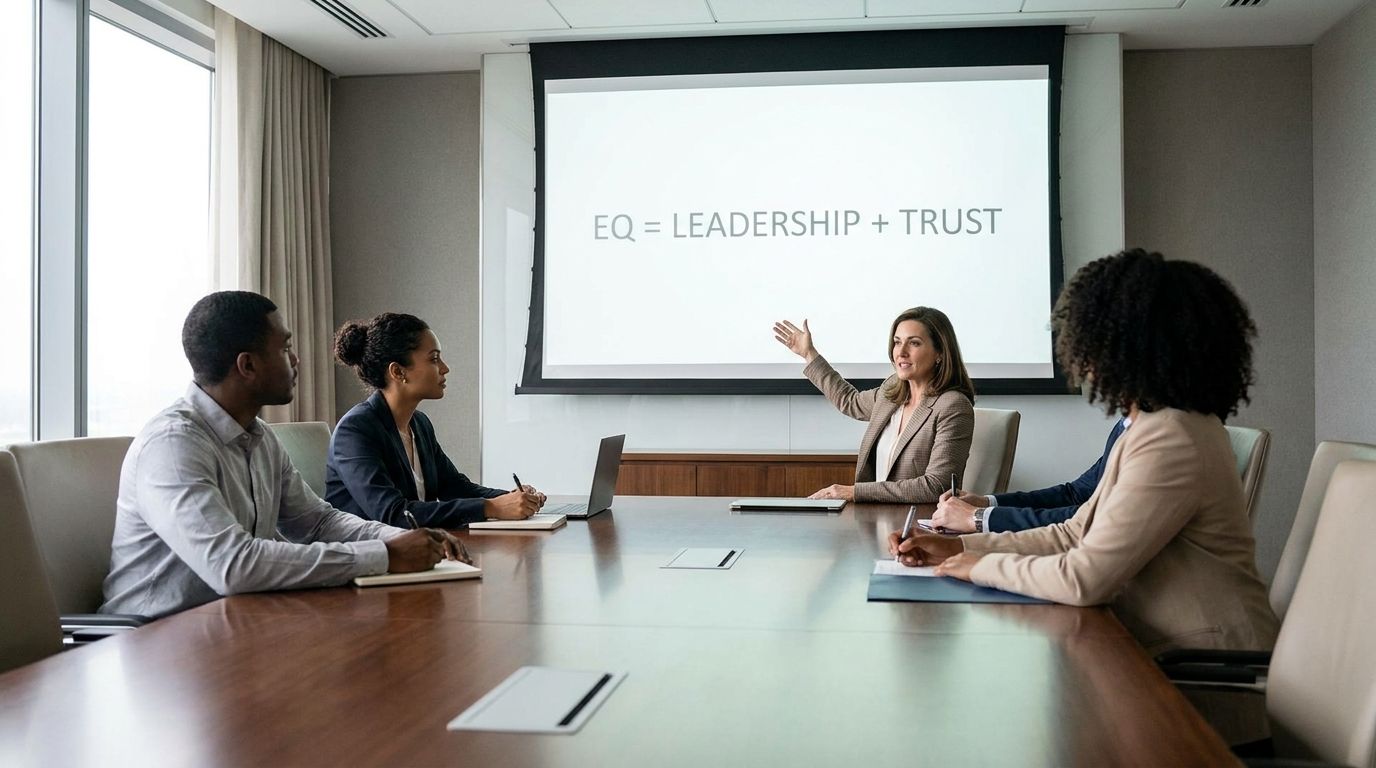
    This is where EQ beats IQ in leadership. Intelligence quotient (IQ) helps you solve technical problems, process information, and learn quickly. Emotional intelligence (EQ) helps you read the room, regulate your reactions, coach performance, resolve friction, and keep people aligned when the work gets messy. The strongest leaders don’t choose between competence and connection; they use connection to turn competence into results.

    Does Emotional Intelligence Really Beat IQ For Career Success?

    Yes, emotional intelligence often predicts leadership success better than intelligence quotient once a person has the baseline technical ability required for the role. Daniel Goleman’s research found that emotional intelligence was twice as important as technical skills and IQ for superior performance across job levels.

    Goleman’s analysis of competency models from 188 companies found that emotional intelligence became even more important at senior levels. For top leadership roles, emotional intelligence accounted for 67% of the abilities linked with outstanding performance. That finding helps explain why some technically gifted managers stall when they move from individual contributor work into roles that require influence, coaching, and organizational trust.

    TalentSmart’s emotional intelligence research points in the same direction. Its testing of emotional intelligence alongside 33 other workplace skills, using data from over 2 million test-takers, found EQ to be the strongest predictor of performance, explaining 58% of success across job types. It also reported that 90% of top performers are high in emotional intelligence, giving you a practical reason to treat EQ as a performance lever rather than a personality bonus.

    What Did Google’s Project Oxygen Discover About Soft Skills?

    Google’s Project Oxygen found that the best managers were defined mostly by behaviors tied to people skills. The top seven manager behaviors identified in the research were all soft skills, and science, technology, engineering, and mathematics (STEM) expertise ranked last among the eight key attributes.

    That finding is useful because Google is often associated with technical excellence. If any organization could prove that technical brilliance alone creates great managers, Google would be a strong candidate. Its own internal data pointed elsewhere: the best managers coached, empowered teams, communicated well, supported career growth, created inclusive team conditions, and gave people clear direction.

    The lesson for you is direct. Technical expertise can earn credibility, yet leadership credibility fades fast when people feel ignored, micromanaged, confused, or unsupported. Project Oxygen showed that manager quality depends on repeated behaviors your team can feel every week: listening, sharing information, creating clarity, giving useful feedback, and helping people grow.

    What Statistics Prove Soft Skills Matter More Than Hard Skills?

    The strongest soft skills statistics connect emotional intelligence to performance, leadership quality, hiring decisions, and business outcomes. The pattern is consistent: technical skills open doors, but interpersonal skills often decide who advances, who retains talent, and who delivers through a team.

    LinkedIn’s Global Talent Trends research reported that 92% of talent professionals say soft skills matter as much as or more than hard skills when hiring. It also found that 80% say soft skills are becoming more important to company success. The skills named in that research included creativity, persuasion, collaboration, adaptability, and emotional intelligence, which are the same abilities managers use to keep cross-functional work moving.

    The Center for Creative Leadership adds a warning from the failure side of the equation. Its research on executive derailment has linked stalled or failed leadership careers to interpersonal relationship problems. That means emotional intelligence isn’t only a “nice to have” for leaders who want to be liked; it’s a risk control skill for managers who need to keep authority, trust, and influence intact.

    How Can You Measure The Return On Investment Of Soft Skills Training?

    You can measure return on investment (ROI) for soft skills training by tracking business outcomes before and after the training. Focus on productivity, retention, absenteeism, manager ratings, engagement, conflict rates, promotion readiness, and quality of team communication.

    The National Bureau of Economic Research working paper on soft skills training for garment workers gives you one of the clearest data points. The study found that training in communication, problem-solving, time management, and financial literacy increased productivity by 12%. It also reported an approximate 250% return on investment within eight months of training, making the business case easier to defend with finance leaders.

    Use a simple measurement plan inside your own company. Pick one or two leadership behaviors, connect them to a business metric, set a baseline, train managers, then measure again after a defined period. If you train managers on coaching conversations, track retention, internal mobility, performance review quality, and employee survey items tied to manager feedback. That keeps soft skills development tied to evidence instead of opinion.

    Can Emotional Intelligence Be Learned?

    Yes, emotional intelligence can be developed through feedback, practice, coaching, reflection, and repeated behavior change. You’re not locked into your current level of self-awareness, self-control, empathy, or relationship skill.

    The learnability of EQ matters because many leaders treat emotional intelligence as a fixed trait. That belief lowers accountability. A manager may say, “That’s just my style,” when the real issue is poor listening, rushed feedback, defensive reactions, or weak emotional regulation. Leadership development works best when it turns those patterns into observable behaviors people can practice and measure.

    Start with behaviors, not labels. Instead of telling a manager to “be more empathetic,” ask them to summarize what an employee said before responding. Instead of asking someone to “communicate better,” measure whether priorities are stated in plain language, decisions are documented, and team members know what good work looks like. Emotional intelligence improves when you make it specific enough to coach.

    What Do Hiring Managers Value More, Hard Skills Or Soft Skills?

    Hiring managers still need hard skills, but many talent professionals now rate soft skills as equal to or more important for long-term success. Hard skills help someone qualify for a job; soft skills often determine whether they can collaborate, adapt, lead, and grow inside the role.

    This distinction matters most in leadership hiring. A manager who knows the technical work but can’t coach, listen, resolve tension, or build trust creates drag across the team. People slow down, avoid hard conversations, withhold problems, and spend energy managing the manager instead of doing the work. That cost rarely appears in a job description, yet it shows up in missed deadlines, turnover, and poor morale.

    Strong hiring processes test for interpersonal skills directly. Use structured interviews, work samples, reference checks, and behavior-based questions tied to real manager duties. Ask candidates how they handled disagreement, gave difficult feedback, rebuilt trust, or helped a struggling employee improve. You’re not searching for charm; you’re searching for repeatable leadership behavior.

    Why Does The Future Of Work Demand EQ?

    The future of work demands EQ because technical change increases the need for adaptability, learning, trust, and human judgment. The World Economic Forum’s Future of Jobs Report ranked several people-centered and self-management skills among the top skills employers need, including resilience, flexibility, self-awareness, empathy, active listening, leadership, and social influence.

    Technology changes the work, but people still decide whether teams learn fast enough to keep up. Leaders need to help employees handle ambiguity, adopt new tools, discuss risks, and shift priorities without burning out. That requires more than technical training. It requires communication discipline, emotional steadiness, and the ability to keep people engaged when the plan changes.

    This is why soft skills belong in workforce planning, not just leadership retreats. If your organization treats emotional intelligence as optional, you’ll underinvest in the skills that help people adapt. If you build EQ into hiring, manager development, promotion criteria, and performance reviews, you create leaders who can handle complexity without losing the room.

    How Do You Argue For Soft Skills Investment At Work?

    You argue for soft skills investment by connecting it to measurable business problems. Don’t sell emotional intelligence as personal growth; connect it to productivity, retention, manager effectiveness, engagement, customer experience, and leadership bench strength.

    Start with the pain your company already recognizes. If turnover is high, show how manager behavior affects retention and team trust. If productivity is uneven, show how poor communication, unclear priorities, and conflict slow execution. If promotions are failing, show how technical experts need people skills before they manage teams.

    Then present the evidence in plain terms. Google found that its best managers were defined mostly by soft-skill behaviors. Goleman found emotional intelligence was twice as important as IQ and technical skill for superior performance. TalentSmart linked EQ to 58% of job success across roles. The National Bureau of Economic Research study showed measurable productivity and return on investment gains after soft skills training. That is the hard data on soft skills your business case needs.

    Does Emotional Intelligence Matter More Than IQ For Leadership Success?

    • Yes.
    • EQ predicts leadership behavior.
    • IQ supports technical judgment.
    • Great managers need trust, empathy, communication, and influence.
    • That’s why EQ beats IQ in leadership.

    Stop Calling Them Soft When The Results Are Hard

    Soft skills aren’t soft when they determine whether people trust you, follow you, stay with you, and do their best work. The data points to the same conclusion from several angles: Google’s manager research, Goleman’s emotional intelligence findings, TalentSmart’s performance data, LinkedIn’s hiring research, the World Economic Forum’s skills rankings, and the National Bureau of Economic Research productivity study. If you want stronger leadership, don’t treat EQ as a personality trait or a workshop topic. Treat it as a business capability you can hire for, develop, measure, and improve. That’s the practical reason EQ beats IQ in leadership: leadership is judged by what your team can do because of how you lead.


    References

  • The Resilience Blueprint: Science-Backed Strategies Leaders Use to Bounce Back

    The Resilience Blueprint: Science-Backed Strategies Leaders Use to Bounce Back

    Leadership resilience is the ability to recover function, make sound decisions under pressure, and keep your team steady without normalizing exhaustion. You build it by regulating stress, redesigning work, protecting recovery, and creating team conditions that prevent strain from turning into damage.

    When pressure keeps stacking up, resilience stops being a motivational concept and becomes an operating requirement. This article shows you what resilient leadership looks like in practice, where most leaders go wrong, and which science-backed behaviors help you recover faster, lead more clearly, and protect team performance over time.

    What Does Resilience Actually Mean For Leaders?

    For leaders, resilience is not a personality trait that a few people naturally possess. It is a repeatable capacity to absorb stress, adapt to change, recover after disruption, and continue making sound judgments when stakes are high. That matters because leadership pressure rarely arrives as one clean event. It shows up as stacked demands, unclear priorities, emotional labor, operational friction, and the steady drain of constant decision-making.

    You see the difference between stamina and resilience when a leader faces a setback. Stamina lets you push through a hard week. Resilience lets you recover your judgment, reset priorities, regulate your reactions, and protect your team from inheriting your strain. If you only focus on endurance, you can keep moving while your decision quality, communication, and patience quietly erode. That is not resilience. That is unmanaged depletion with a professional finish on top.

    Research on workforce and organizational resilience points to adaptation, flexibility, and sustained performance under disruption. Public health guidance on professional wellbeing reaches a similar conclusion from another angle: work conditions, leadership behavior, support, autonomy, and workload shape how well people function under stress. Put together, the message is direct. Leadership resilience lives partly in your habits and partly in the operating environment you create.

    This matters at the executive level because teams do not experience pressure in the abstract. They experience it through your pace, your clarity, your boundaries, your follow-through, and your ability to separate urgency from noise. A resilient leader does not erase difficulty. A resilient leader contains it, interprets it correctly, and keeps the system from becoming more chaotic than the situation itself.

    If you want a practical definition, use this one: leadership resilience is your ability to stay effective during strain, recover without carrying damage forward, and shape team conditions that support steady performance. That definition is useful because it keeps resilience connected to execution. It is not self-help language. It is management discipline under pressure.

    Can Leaders Really Bounce Back From Burnout Or Is That The Wrong Goal?

    Leaders can recover from burnout, but the phrase “bounce back” can point you in the wrong direction. Burnout is not simple fatigue, and it is not solved by a long weekend, a better morning routine, or a few encouraging conversations. It is tied to chronic workplace stress that has not been managed well. That means recovery usually requires changes in workload, role design, decision rights, staffing, expectations, and boundaries.

    Many leaders get stuck because they treat burnout as an energy problem when it is often a systems problem. If your calendar is packed with low-value meetings, your team structure is unclear, your role has expanded without support, and your default operating mode is permanent availability, then your exhaustion is carrying useful information. It is telling you that the current design of work is unsound. Pushing harder only keeps the strain in motion.

    This is where many resilience articles lose the plot. They tell leaders to build grit, practice gratitude, and stay positive, yet they never address load, control, and recovery. Burnout does not respond well to cosmetic fixes layered onto an unchanged work pattern. If the original conditions remain in place, the same stress cycle returns. The short-term lift from motivation fades, and the old exhaustion comes back with more cynicism attached.

    Real recovery usually starts with a hard audit. Which parts of your work create the most drain with the least return? Where are expectations vague? Which decisions are stuck at your level that should move lower? Which meetings consume attention without producing movement? Which people issues have lingered long enough to become daily friction? Until you answer those questions honestly, “bouncing back” can become a polished way of saying “returning to the same unsustainable setup.”

    The better goal is not a return to the old normal. The better goal is a stronger operating model. You want to come back with clearer boundaries, cleaner priorities, fewer hidden drains, and recovery built into your week. Leaders who recover well do not simply restore capacity. They redesign the conditions that drained it in the first place.

    What Habits Make Leaders More Resilient Under Pressure?

    Resilient leaders tend to rely on a small set of disciplined habits rather than dramatic gestures. They clarify priorities early, reduce ambiguity, protect recovery time, communicate with steadiness, and review what is creating friction before friction becomes dysfunction. None of these habits look flashy from the outside. Their value shows up in steadier decision-making, fewer unforced errors, and teams that remain functional when pressure rises.

    The first habit is ruthless prioritization. Under stress, many leaders expand activity instead of narrowing focus. They add meetings, create more check-ins, and keep every initiative alive because cutting anything feels risky. That usually makes performance worse. When your team has too many active priorities, execution quality drops, rework rises, and people lose confidence in what actually matters. A resilient leader reduces noise fast, sets clear top priorities, and repeats them until the organization can act without guessing.

    The second habit is stable communication. Teams can tolerate bad news better than erratic signals. They can work through setbacks when goals are clear, roles are defined, and updates arrive in a calm, direct rhythm. Problems start when leaders communicate emotionally one day, disappear the next, then return with a sudden demand for urgency. Under pressure, consistency becomes a form of leadership strength. It lowers confusion, preserves trust, and keeps people from spending energy decoding your mood.

    The third habit is active recovery. This does not mean passive collapse at the end of a brutal week. It means protecting the conditions that allow your mind and body to restore decision quality. Sleep, time away from input, breaks between demanding blocks of work, and periods without reactive communication are performance tools. Leaders often treat recovery as optional until their patience thins, memory slips, and judgment gets noisy. By then, the bill has already arrived.

    The fourth habit is load management. Strong leaders do not let every problem become proof of commitment. They separate healthy stretch from chronic overload. Stretch can sharpen growth when it is time-bound, supported, and tied to a useful goal. Chronic overload is different. It strips away attention, increases emotional reactivity, and turns normal work into a constant recovery deficit. If you want resilience, manage load before load starts managing you.

    The fifth habit is disciplined reflection. After a setback, resilient leaders do not jump straight into motion to relieve discomfort. They pause long enough to review what failed, what was misunderstood, what signals were missed, and what should change operationally. This is not a soft practice. It is a leadership control mechanism. Reflection prevents repeat mistakes, improves pattern recognition, and keeps pressure from forcing you into automatic but expensive responses.

    You do not need a dozen new routines. You need a reliable set of leadership habits that preserve clarity under strain. Prioritize with precision, communicate with steadiness, protect recovery, manage load, and review setbacks without defensiveness. Those habits build resilience where it matters most: in how you operate when the pressure does not let up.

    How Do Resilient Leaders Recover After Setbacks Without Burning Out Their Teams?

    After a setback, your team does not need a performance of invincibility. Your team needs direction, emotional steadiness, and a visible plan. One of the fastest ways to spread strain through an organization is to let your own stress become the operating climate. When leaders react with panic, blame, vagueness, or constant escalation, teams stop focusing on the work and start managing the leader. That is expensive in every sense.

    Recovery starts with containment. You define what happened, what it affects, what changes now, and what does not change. You set a clear decision path, remove unnecessary work, and stop side conversations from multiplying confusion. That kind of response settles the system. It tells people that the issue is real, the response is structured, and energy will go toward action rather than noise. Teams recover faster when the leader narrows the field and steadies the rhythm.

    Psychological safety matters here, not as a slogan, but as an execution condition. Teams need enough trust to raise concerns early, question assumptions, and report problems before those problems expand. If people fear blame, they hide risk, soften bad news, and protect themselves instead of protecting the work. Leadership behavior shapes this every day. Transparency, self-control, accountability, and respect for candor create the room that effective recovery requires.

    You also need to watch the hidden ways leaders transfer load. One common pattern is urgency dumping. A leader feels intense pressure, pushes that pressure down the chain, and calls the result alignment. Another pattern is silent re-prioritization, where new demands arrive but nothing old gets removed. The team now carries double expectations with half the clarity. This is how short setbacks become chronic exhaustion. Resilient leaders do the opposite. They remove lower-value work, make trade-offs explicit, and give teams a realistic path to regain traction.

    Another mark of resilient recovery is emotional range with control. Teams do not expect you to be robotic. They do expect you to be stable enough that your reactions do not become a second crisis. You can acknowledge disappointment, name the seriousness of a miss, and call for urgency without creating a climate of threat. The difference lies in regulation. Calm does not mean passive. It means your tone serves the work instead of amplifying the strain around it.

    When a setback hits, your real job is to restore useful movement. Clarify priorities, reduce confusion, protect speaking up, and remove excess load. Your team should leave a recovery conversation with more certainty than they brought into it. If they leave with more emotional weight and less operational clarity, resilience has not shown up yet.

    What Role Do Sleep, Stress Regulation, And Recovery Play In Leadership Resilience?

    Sleep and recovery shape leadership performance more than many executives want to admit. Poor sleep affects emotional regulation, attention, impulse control, and judgment, which means it affects how you lead people, read risk, and make decisions. When sleep quality drops over time, you become more vulnerable to overreaction, impatience, narrow thinking, and distorted threat assessment. Those changes do not stay personal. They move into meetings, feedback conversations, hiring calls, and strategic choices.

    This matters because modern leadership often rewards visible availability more than sound recovery. You can answer messages late, start early, stay on every channel, and still look committed. Yet the physiology does not negotiate. When your recovery is weak, your cognitive bandwidth shrinks. You miss details you would normally catch. You become less flexible in conflict. Small issues feel larger. Ambiguity feels more hostile than it is. That is how depletion turns into poor leadership conduct without any dramatic warning sign.

    Research linking sleep quality with emotion experience and regulation gives this issue real weight. Leaders often talk about executive presence, judgment, and composure as if they are purely mental traits. They are not. They are also biological outputs supported by rest, stress regulation, and recovery habits. If recovery collapses, the leadership qualities you rely on most begin to weaken in ways that are subtle at first and costly later.

    Stress regulation is just as important. Pressure itself is not always the problem. Uninterrupted activation is. If you move from one hard conversation to another, one decision block to another, and one digital interruption to another with no reset, your nervous system never gets enough space to downshift. Over time, that creates a baseline of tension that feels normal. Leaders then mistake chronic activation for drive. It is not drive. It is wear with a productivity label on it.

    Protecting recovery does not require a complicated protocol. It requires seriousness. Guard sleep with the same discipline used for major meetings. Reduce late-night reactivity where possible. Build brief breaks between demanding cognitive tasks. Create periods of the day without message checking. End some meetings early to preserve transition time. These actions look small, yet they restore attention and reduce the carryover stress that degrades executive function.

    If your goal is sustained resilience, treat recovery as performance infrastructure. Your team pays for your exhaustion long before anyone names it directly. When you protect sleep, regulate stress, and preserve recovery capacity, you are not stepping away from leadership demands. You are protecting the very abilities those demands require.

    How Can Leaders Build Team Resilience, Not Just Personal Resilience?

    Team resilience does not emerge from motivational language. It grows from working conditions that let people adapt, recover, speak openly, and maintain trust under pressure. If you want a resilient team, start with role clarity, manageable demands, useful information flow, and visible support. Teams become stronger when they know what matters, understand how decisions get made, and trust that raising a concern will not create unnecessary personal risk.

    Psychological safety is a major part of this, but it works only when supported by real management behavior. People speak up when leaders respond well to bad news, admit uncertainty without losing direction, and separate problem-solving from blame. They do not speak up just because a company says candor is valued. They watch what happens to the first person who raises a hard truth. That moment teaches more than any cultural statement.

    Role clarity is another major driver. Teams burn out faster when ownership is fuzzy, authority is mismatched with accountability, and expectations shift without direct explanation. Leaders often underestimate how exhausting ambiguity can be. When people must constantly guess what success looks like, they spend energy protecting themselves from error instead of executing well. A resilient team needs clear responsibilities, clear escalation paths, and clear standards for what good work looks like right now.

    You also need to manage demand with credibility. Teams can handle intense periods when they believe the load is justified, time-bound, and supported. They struggle when every week carries the same urgency and nothing ever comes off the list. This is where leader discipline matters. Remove low-value work. Decline unnecessary complexity. Re-sequence priorities when capacity is stretched. Team resilience grows when people see that pressure is managed rather than simply passed along.

    Support from direct managers is often the deciding factor. Workers do not experience the company in the abstract. They experience it through the manager who sets expectations, gives feedback, resolves friction, and interprets pressure. If frontline leaders are burned out, unclear, or unsupported, the team absorbs that instability quickly. Building team resilience means strengthening managers, not just issuing wider organizational messages about wellbeing or adaptability.

    Resilient teams also learn. They review failures without humiliation, extract useful lessons, and adjust how they work. That creates confidence based on evidence, not optimism. When people know that mistakes will be examined fairly and used to improve the system, they are more willing to surface weak points early. That willingness is one of the strongest predictors of adaptation under strain.

    Your personal resilience matters, yet it is not enough. Teams need conditions that make resilience possible at scale. Build trust, clarify roles, manage demands, strengthen managers, and create a culture where learning moves faster than blame. That is how resilience shifts from an individual survival skill to a repeatable team capability.

    What Are The Biggest Mistakes Leaders Make When Trying To Become More Resilient?

    The most common mistake is treating resilience as a private self-management project detached from how work is structured. Leaders read about mental toughness, discipline, and stress management, then ignore overload, unclear priorities, poor staffing, and nonstop interruption. That creates a false standard where people are expected to absorb preventable strain with better attitudes. The result is not resilience. The result is a polished version of endurance that eventually breaks down.

    Another major mistake is confusing resilience with constant availability. Many leaders assume that being responsive at all hours signals commitment and control. Over time, it does the opposite. It teaches the team that urgency is always on, weakens boundaries, reduces the chance of recovery, and makes thoughtful work harder to protect. Constant availability also encourages lazy escalation. Problems rise to you faster, not because they require your judgment, but because your behavior trained the system to depend on it.

    A third mistake is overusing individual coping tools while leaving structural stress untouched. Exercise, recovery routines, coaching, and reflection can help. They stop helping when they are used to prop up a broken operating model. If role overload, unfair treatment, unclear expectations, and weak support remain in place, personal tactics will have limited power. They may improve your tolerance for strain without removing the source of strain. That is a dangerous trade if left unexamined.

    Leaders also make the mistake of ignoring early warning signs. Cynicism, reduced patience, chronic sleep disruption, low-quality concentration, emotional spillover at home, and a persistent sense of dread before routine work all deserve attention. Many high performers dismiss these signs because output still looks acceptable. Yet resilience does not fail only when performance collapses in public. It often fails quietly first, in how much energy normal work now requires.

    Another costly error is forcing positivity into situations that require honesty and redesign. Teams do not trust leaders who gloss over strain with slogans about grit, adaptability, or pushing through. They trust leaders who identify friction clearly, make trade-offs visible, and remove obstacles where possible. False optimism creates distance. Directness builds credibility. Under pressure, credibility is one of the most valuable assets you have.

    There is also a strategic mistake many senior leaders make: treating team strain as a local problem rather than a signal about the wider system. If multiple teams are exhausted, if managers are carrying unresolved people issues with little support, if meetings are crowding out actual work, and if every priority is marked urgent, then the organization is producing stress faster than individuals can absorb it. At that point, resilience training alone will not solve the issue. The operating model needs repair.

    The leaders who become truly resilient stop asking how to tolerate more pressure and start asking how to lead in a way that prevents avoidable strain. That shift changes everything. It moves resilience out of the realm of image and into the realm of management quality, where it belongs.

    What Is Leadership Resilience?

    • Leadership resilience is the ability to recover after stress, adapt under pressure, and keep your team effective without normalizing burnout.
    • It depends on clear priorities, steady communication, recovery, healthy workload design, and psychological safety.
    • Strong leaders protect performance by redesigning work, not by absorbing endless strain.

    Lead With Recovery, Not Just Endurance

    Resilience gives you a practical advantage when pressure is constant, setbacks are public, and your team is reading your signals every day. If you define it correctly, you stop chasing toughness for its own sake and start building the conditions that support clear thinking, steady communication, healthy recovery, and sustainable execution. That means tightening priorities, reducing overload, protecting sleep, strengthening managers, and creating enough trust for people to surface problems early. The strongest leaders do not prove their value by carrying unlimited strain. They protect performance by making better decisions about how work gets done, how recovery is preserved, and how teams stay steady when pressure rises.


  • Time Management for Visionaries: How Leaders Balance Big Ideas with the Daily Grind

    Time Management for Visionaries: How Leaders Balance Big Ideas with the Daily Grind

    Visionary leaders balance big ideas with daily execution by treating time as a leadership tool, not a personal preference. You protect space for strategy, build operating rhythms for execution, and remove low-value work before it consumes the calendar.

    If your days feel packed but your top priorities still move too slowly, the problem usually is not effort. It is calendar design, decision flow, meeting control, and unclear boundaries around where your attention belongs. This article gives you a practical way to protect strategic thinking, stay grounded in execution, and lead with more control over your week.

    How Do Visionary Leaders Balance Strategic Thinking With Daily Operations?

    You balance strategy and operations by assigning each one a defined place in your schedule. Vision without operational contact turns vague fast, and pure execution without thinking time turns you into the most expensive task manager in the company. Strong leaders do not bounce randomly between those modes all day. You create recurring blocks for strategic work, decision-making, team reviews, and unscheduled issues so your week reflects your priorities instead of your inbox.

    This matters because leadership time gets distorted more easily than most roles. Senior leaders often believe they are spending enough time on planning, direction, and priority-setting, yet the calendar shows something else entirely. Meetings expand, messages stack up, and small approvals start to crowd out the work only you can do. If you do not separate the important from the urgent, the urgent wins every time.

    The fix starts with a simple operating rule: your calendar must show evidence of your real job. If your role is to set direction, allocate attention, remove friction, and make quality decisions, your schedule should reflect those duties in visible blocks. When strategy lives in leftover time, it disappears. When strategic work has a protected place on the calendar, your team gets faster decisions, clearer priorities, and steadier leadership.

    You also need to stay close enough to operations to keep your judgment sharp. Visionary leadership is not distance from the work. It is disciplined altitude. You step back far enough to see patterns, risks, and opportunities, then drop down where your involvement changes outcomes, strengthens alignment, or resolves important tradeoffs.

    What Time Management Strategies Actually Work For Founders And Executives?

    The most reliable strategies are time blocking, delegation, decision batching, meeting discipline, and energy-based scheduling. These work because they reduce context switching and force you to spend more time on work with strategic value. Productivity tricks fade quickly at the executive level. Structural changes to how your week operates keep paying off.

    Time blocking works when you protect it like a business commitment, not a nice idea. A block marked for strategy, hiring, planning, or deep work cannot remain open to casual booking. If people can override it without a high bar, the block is decoration. Leaders who get value from time blocking defend it, prepare for it, and enter it with a defined objective.

    Delegation matters because many leaders still spend too much time on work that can be systemized, trained, or automated. A task that takes only a few minutes each day looks harmless until it repeats hundreds of times across a year. Once you start measuring recurring tasks that do not require your judgment, you quickly see how much strategic capacity is leaking away through habit.

    Decision batching helps in a different way. Instead of scattering approvals, review calls, and check-ins throughout the day, you collect them into specific windows. That keeps your mind from shifting back and forth between creative thinking and operational response. When your brain knows there is a set time for approvals and escalations, strategic work becomes easier to protect.

    Meeting discipline may be the fastest improvement available to many leaders. You need a clear standard for why a meeting exists, who must attend, what decision must come out of it, and what could be handled asynchronously through shared documents or written updates. Most bloated calendars are not caused by leadership ambition. They are caused by weak filters.

    Energy-based scheduling is the piece many people ignore. Your best thinking hours should go to the hardest work, not the easiest tasks. If your judgment is strongest in the morning, that is where strategic thinking, writing, planning, and difficult decisions belong. Administrative cleanup, status reviews, and routine follow-up can sit later in the day without hurting quality.

    How Much Time Should Leaders Spend On Strategy Versus Execution?

    There is no universal percentage that fits every founder, chief executive officer, or department head. Your best split depends on company stage, team maturity, market pressure, and whether the business is stable or moving through a major shift. What matters is that strategy time is visible, recurring, and tied to a small number of top priorities. If you wait to “find time” for strategic work, you are already behind.

    Many leaders make the mistake of spreading attention across too many priorities at once. That creates the appearance of involvement but weakens quality and follow-through. Your calendar should favor a handful of critical bets, not a long list of “important” topics that all receive partial attention. Once your focus expands too far, everything moves slower, decisions get softer, and your team starts guessing what matters most.

    Execution still deserves serious time. Visionary leadership does not mean staying above delivery. If your strategy never gets translated into milestones, tradeoffs, hiring decisions, product choices, and operational reviews, it remains abstract. The strongest leaders convert strategy into sequence. You define where the business is going, then keep enough contact with execution to make sure the route still fits reality.

    There are seasons when execution deserves a larger share of leadership time. During a turnaround, a transformation, an acquisition, a product reset, or a period of rapid scaling, your direct involvement in execution may need to rise sharply. In those moments, the right move is not to protect strategy at the expense of operational clarity. The right move is to concentrate your time on the few activities that will determine whether the shift succeeds.

    A practical standard works better than a fixed ratio. Review your past two weeks and ask a hard question: did your calendar advance the outcomes only you can drive? If the answer is no, you do not need a new productivity app. You need a tighter definition of what deserves your attention and a stronger refusal process for everything else.

    Why Do Leaders Feel Stuck In Meetings And Reactive Work All Day?

    Leaders feel trapped in reactive work because the modern workday is built to reward responsiveness. Messages arrive across multiple channels, meetings multiply without enough discipline, and small issues get routed upward faster than teams are trained to resolve them. You can be busy every hour and still end the week unsure whether anything meaningful moved forward. That creates the familiar feeling of motion without traction.

    Interruptions are a major reason strategic work keeps slipping. Frequent context switching reduces the quality of thought, extends the time needed to finish important work, and leaves you mentally half-committed to several issues at once. Even short interruptions carry a recovery cost. By the time you return to a planning memo, a hiring review, or a product decision, the mental thread is weaker and the pace is gone.

    Meetings also create more than lost time. They create residue. A poor meeting does not end when the call ends. It leaves unanswered questions, side conversations, follow-up messages, and fragmented ownership. If your calendar is packed with meetings that do not drive decisions, your workday gets filled twice, once by the meeting itself and once by the cleanup it creates.

    Another reason leaders get stuck is that access to them becomes too easy. Teams start routing routine approvals, rough drafts, and preventable uncertainties upward because the leader has trained the organization to expect fast answers. This can feel like support, but over time it weakens decision quality across the team. Your availability should help the company move faster, not teach people to stop thinking until you respond.

    If your day feels reactive from start to finish, you need to inspect the system, not just your discipline. Look at who can book your time, what requires your approval, how meetings are created, how updates are shared, and which channels interrupt you most often. Time pressure at the leadership level is often an operating design problem wearing the mask of a personal productivity problem.

    How Can Leaders Protect Time For Deep Work And Big-Picture Thinking?

    You protect deep work by scheduling it early, defending it firmly, and entering it with one clear objective. Strategic thinking is real work. It belongs on the calendar with the same seriousness as a board meeting, a customer review, or a budget decision. If you leave it undefined, other people will fill that space with requests that feel urgent but add little long-term value.

    The most useful deep-work blocks are specific. “Think about strategy” is too vague to hold up under pressure. “Review top three growth priorities,” “prepare decision memo on product direction,” or “map hiring needs for the next two quarters” gives the block purpose. Specificity also lowers resistance. You start faster when you know what the block is for.

    You need stronger boundaries around communication during these periods. Silence notifications, close message platforms, and tell key people what qualifies as a real interruption. Open-door leadership sounds generous, but permanent accessibility destroys decision quality. A leader who never gets uninterrupted thinking time becomes reactive by default, and that pattern spreads through the company.

    It helps to create recurring rhythms around reflection and review. One weekly block can focus on long-range planning, another on performance patterns, another on people issues that need more thought than a quick reply allows. This creates steadier judgment. You stop solving everything at the same altitude and start matching your attention to the actual weight of the issue.

    Deep work also depends on what you remove. If you continue accepting low-value meetings, fragmented approval chains, and constant pings, no amount of scheduling discipline will hold. Protection starts before the calendar. It begins with deciding that some work does not deserve live discussion, some requests do not need your involvement, and some answers can wait until the next decision window.

    Teams often follow the leader’s behavior. When you protect serious thinking time, you signal that thoughtful work matters. When you answer every message instantly and sit in every meeting, you teach the organization that speed of response matters more than depth of thought. Culture often forms around what leadership repeatedly allows.

    When Should A Visionary Leader Delegate, Automate, Or Stay Hands-On?

    You should stay hands-on where your judgment changes quality, speed, or alignment in a meaningful way. That usually includes setting direction, making high-stakes tradeoffs, selecting key people, resolving cross-functional conflict, shaping culture, and handling decisions with lasting consequences. These are not tasks to outsource casually. They define leadership value.

    You should delegate repeatable work, recurring approvals, and specialized tasks that someone else can own with clear standards. If a competent team member can perform the work at a strong level after proper instruction, holding onto it usually signals habit, not necessity. Leaders often keep tasks because they are familiar, not because they are strategic. Familiar work feels productive, but it can quietly drain the hours needed for higher-value responsibilities.

    Automation belongs wherever routine process is stealing attention from judgment. Reporting, scheduling, reminders, document routing, note capture, and recurring updates often consume more leadership time than they deserve. When systems can handle those reliably, you free up attention for decisions that require experience, pattern recognition, and business sense.

    You also need to watch for the opposite error. Delegation is not permission to drift away from the real work of the business. Teams lose trust in leaders who speak in broad strategy language but never engage with operational truth. If you are too far removed from customers, delivery timelines, cost pressure, or team friction, your decisions get polished but weak. Staying hands-on in selected moments keeps your credibility intact and your judgment grounded.

    A useful test is this: does this activity require your unique value, your role authority, or your direct relationship capital? If the answer is yes, stay involved. If the answer is no, move it downward into the team or into a system. The goal is not to do less work. The goal is to spend more of your working time on work that only you should own.

    What Does A Practical Weekly Schedule Look Like For A Visionary Leader?

    A practical week gives each type of leadership work its own place. You need blocks for strategic thinking, team cadence, decision-making, one-on-one conversations, and operational review. When everything is mixed together across the day, you lose momentum and make lower-quality calls. A structured week creates cleaner transitions and better use of mental energy.

    A strong model starts with one or two protected strategy blocks each week. These are reserved for planning, writing, reviewing market signals, examining performance patterns, and making long-range choices. Put them at a time when your thinking is strongest. Guard them more tightly than routine internal meetings.

    You also need one or two execution review windows. These are not generic status calls. They are decision-oriented reviews that surface blockers, confirm ownership, and test whether priorities are still aligned. If you run these well, they reduce noise across the rest of the week because teams know when issues will be reviewed and what level of preparation is expected.

    Decision blocks are another useful tool. Instead of letting approvals and escalations interrupt you all day, create a recurring window where those items get handled in batches. This shortens response time, lowers mental switching costs, and gives your team a predictable way to get resolution. It also helps you distinguish between a real priority and a request that only feels urgent because it arrived loudly.

    One-on-one meetings deserve protected time too, especially with direct reports. These conversations are where alignment, coaching, expectations, and trust get built. If you keep cancelling them for short-term operational noise, you create more operational noise later. Well-run one-on-ones reduce misfires, weak ownership, and unnecessary escalation.

    You should also leave buffer space in the week. A calendar filled to one hundred percent capacity is a fragile calendar. Leaders deal with change, surprises, customer pressure, staffing issues, and decisions that cannot wait. Buffer time prevents one disruption from breaking the whole week. It also gives you room to think before responding, which is often where the best leadership decisions are made.

    End the week with a short review. Look at where time went, which meetings deserved the time, what pulled you off priority, and what needs to change in the coming week. This is not personal reflection for its own sake. It is management discipline. If you do not review your calendar, you cannot improve how it supports the job.

    What Habits Keep Big Ideas Connected To Real Execution?

    Big ideas stay useful when you translate them into a small set of active priorities. Leaders often lose traction when strategy remains broad and inspirational but never gets narrowed into operating choices. Your team cannot execute a concept. They can execute a defined direction, a sequence of decisions, and a measurable set of outcomes tied to ownership.

    One useful habit is reviewing the top priorities daily or weekly in plain language. This keeps your attention anchored and helps you spot distractions faster. If a request, meeting, or side project does not support those priorities, it deserves stronger scrutiny. Clarity speeds refusal.

    Another habit is writing before talking. Written thinking improves precision, exposes weak logic, and helps you make cleaner decisions. Short planning notes, decision memos, and pre-meeting briefs reduce rambling discussion and force sharper problem definition. Leaders who rely only on live conversation often spend more time talking about work than improving it.

    You also need a habit of pushing decisions to the right level. If every issue returns to you, your team stays dependent and your own schedule stays crowded with work that should not require executive attention. Define decision rights clearly. Let people own what fits their role, and step in where the decision has wider business implications or unresolved tradeoffs.

    Regular operating reviews matter because strategy drifts when nobody checks whether current work still supports current priorities. A good review does not bury people in updates. It checks progress, tests assumptions, and forces choices where momentum has slowed. This is where visionary leadership becomes practical leadership.

    One last habit matters more than people admit: saying no quickly and cleanly. Visionary leaders often generate new ideas at a high rate. That strength can become a burden if every idea enters the operating system at once. Protect your team from idea overload. Capture the idea, test its fit, and introduce it only when it earns space among the priorities already in motion.

    How Can Leaders Balance Vision And Execution?

    • Protect calendar time for strategy.
    • Batch decisions and cut low-value meetings.
    • Delegate repeatable work and automate routine tasks.
    • Review a few top priorities weekly.
    • Stay close enough to execution to make grounded decisions.

    Lead Your Calendar Before It Leads You

    If you want more time for strategy, you need more discipline in how your week is built, defended, and reviewed. Big ideas do not get crowded out by accident only once; they get crowded out repeatedly when meetings, approvals, and interruptions face no real filter. Your role is to turn vision into operating focus, and that demands time protection, decision clarity, and better control over where your attention goes. When you shape your calendar around the outcomes only you can drive, your team gets sharper direction and fewer delays. That is how visionary leadership stops feeling split between big thinking and daily grind, and starts working as one integrated job.


    References

  • 5 Apps Every Aspiring Leader Should Use to Boost Productivity and Mindfulness

    5 Apps Every Aspiring Leader Should Use to Boost Productivity and Mindfulness

    You elevate performance faster when you integrate the right productivity mindfulness apps into your daily operating system. These tools sharpen focus, protect attention, strengthen emotional regulation, and help you execute with calm precision instead of scattered effort.

    This guide walks you through five specific apps that ambitious leaders are using right now to control distraction, build presence, reinforce disciplined habits, and structure high-impact workdays. You will see how each tool fits into a leadership routine, when to use it, and how to measure whether it is delivering results. The objective is simple: help you operate with clarity, consistency, and sustained energy.

    1. Forest: Build Relentless Focus One Session at a Time

    Forest trains you to respect your attention. The app grows a virtual tree during a timed focus session, and that tree dies if you leave the app to scroll, check feeds, or wander digitally. The simplicity is powerful. You commit to a time block, and the visible growth reinforces disciplined behavior.

    As a leader, your biggest productivity leak is fragmented attention. Meetings interrupt strategy. Messages interrupt deep thinking. Notifications interrupt creative flow. Forest counters this by turning focus into something tangible. When you see a row of healthy trees built across your week, you start to associate uninterrupted time with achievement rather than restriction.

    Implement Forest in structured blocks tied to your highest-value work. Morning strategic planning. Proposal drafting. Investor decks. Board preparation. Protect those sessions fiercely. Over time, your tolerance for distraction shrinks, and your capacity for sustained cognitive effort expands. That shift alone changes how you perform under pressure.

    Track your weekly focus hours. Compare them month over month. Leaders who move from scattered 10-minute bursts to consistent 60- to 90-minute deep work blocks report clearer thinking, faster execution, and less end-of-day exhaustion.

    2. Freedom: Eliminate Digital Noise Before It Derails You

    Freedom removes the temptation entirely by blocking distracting websites and applications across devices. Instead of relying on willpower, you engineer your environment so that distraction simply isn’t available during protected hours.

    Most professionals underestimate how often they check news, social feeds, and non-urgent email. Those small interruptions compound. They fracture thought patterns and extend task completion time. Freedom enforces boundaries. If social media is blocked from 8:00 AM to noon, it is inaccessible. The decision fatigue disappears because the option disappears.

    Use Freedom in coordination with your calendar. Identify your non-negotiable thinking blocks and align blocking sessions accordingly. If you schedule strategic review from 9:00 to 11:00 AM, activate Freedom for that window. The reduction in cognitive switching preserves mental stamina.

    This tool is especially useful during high-stakes periods. Product launches. Capital raises. Hiring cycles. When your focus matters most, your environment must protect it. Freedom ensures your attention budget goes where it produces return.

    Measure success through reduced context switching. Notice how often you complete priority tasks within planned time frames instead of spilling into the afternoon. That consistency builds trust in yourself and confidence among your team.

    3. Headspace: Strengthen Mental Clarity Before You Lead Others

    Leadership performance depends on mental steadiness. Headspace provides structured meditation and mindfulness exercises that help you regulate stress, sharpen awareness, and recover faster from emotional spikes.

    You don’t need hour-long meditation retreats. Five to ten minutes daily creates meaningful neurological change. Focus improves. Reactivity decreases. Decision quality stabilizes. When your attention wanders during negotiations or difficult conversations, mindfulness training increases your ability to return to the present instead of spiraling internally.

    Schedule Headspace into fixed anchor points. Morning priming before checking messages. Midday reset between demanding meetings. Evening decompression to prevent stress carryover into sleep. Consistency builds mental conditioning.

    Over time, you will notice subtle but measurable shifts. You respond instead of reacting. You pause before speaking when tension rises. You remain composed during uncertainty. Those qualities are not personality traits; they are trained capabilities.

    Use Headspace analytics to track streaks and session frequency. Treat mindfulness the same way you treat financial metrics or operational KPIs. If performance matters, so does the training behind it.

    4. Finch: Reinforce Habits That Sustain Performance

    Finch turns self-care and habit tracking into an engaging, structured routine. You set small daily actions such as journaling, hydration, movement, breathing exercises, or gratitude entries. Completing them supports growth within the app while reinforcing real behavioral consistency.

    Aspiring leaders often chase productivity tools without stabilizing foundational habits. Sleep, emotional reflection, stress management, and small resets determine whether you operate at peak or run on depleted reserves. Finch creates visible accountability for those micro-actions.

    Integrate Finch into your daily rhythm. Morning check-in. Midday mood reflection. End-of-day journaling. You begin to see patterns in energy and emotional fluctuation. Those data points help you adjust workloads, meeting schedules, and decision timing.

    When you observe that your performance dips after four back-to-back meetings, you can intervene. Insert breathing breaks. Restructure time blocks. Protect your cognitive capacity. Habit visibility empowers intelligent adjustment.

    Sustained leadership is not about sprinting; it is about maintaining steady output across quarters and years. Finch supports that long-term endurance by reinforcing foundational behaviors that keep you balanced.

    5. Endel: Engineer the Sound Environment That Supports Deep Work

    Endel generates adaptive soundscapes designed to support specific mental states such as focus, relaxation, or recovery. Rather than playing static background noise, it creates evolving audio environments aligned with time of day and activity.

    Cognitive science shows that certain auditory patterns influence attention and emotional regulation. Endel uses algorithmically generated sound layers to minimize external disruption and stabilize concentration. When used intentionally, it accelerates your entry into deep work mode.

    Activate Endel at the beginning of your most demanding tasks. Strategy modeling. Financial forecasting. Writing. Long analytical review sessions. The sound environment becomes a cue that signals your brain to shift into concentration.

    Leaders who struggle with mental restlessness during independent work often report faster immersion when soundscapes are paired with distraction blocking tools. The combination of Endel and Freedom creates both internal and external alignment.

    Treat this tool as environmental design. Your workspace lighting, seating, and digital layout influence output. Sound does as well. Intentional audio reduces fatigue and helps sustain longer stretches of productive effort.

    How to Integrate All Five Apps Into a Cohesive System

    Tools only work when integrated deliberately. Scattershot usage creates digital clutter rather than improvement. The goal is structured sequencing.

    Begin your morning with Headspace. Establish calm and clarity before engaging with tasks. Move directly into a Forest session for your highest-priority objective. During that block, run Freedom to eliminate digital noise. Pair Endel if you benefit from immersive audio support.

    Midday, use Finch to assess mood and energy. Log habits. Insert micro-breaks when necessary. Continue using Forest and Freedom for afternoon strategic work.

    Close your day with brief reflection in Finch or a short Headspace decompression session. This prevents cognitive residue from carrying into sleep and supports recovery.

    Here is a practical cadence you can implement immediately:

    • 7:00 AM – Headspace (5–10 minutes)
    • 8:00 AM – Forest + Freedom (90-minute deep work block)
    • 12:30 PM – Finch check-in and breathing reset
    • 2:00 PM – Forest + Endel (second focus session)
    • 8:30 PM – Headspace or Finch reflection

    This structure creates psychological rhythm. Your mind begins to associate certain times with focus, others with reflection, and others with restoration.

    Measuring Impact and Maintaining Discipline

    Leadership growth requires metrics. Monitor your focus hours weekly. Track how many distraction-free blocks you complete. Evaluate stress levels subjectively at the end of each week. Notice sleep quality and emotional steadiness.

    If productivity rises but stress escalates, adjust intensity. If mindfulness increases but execution stalls, refine task prioritization. Balance is achieved through measurement and refinement.

    Avoid overcomplication. These five apps cover attention protection, emotional regulation, habit reinforcement, and environmental optimization. That is sufficient. Resist the temptation to stack ten additional tools.

    The real leverage comes from disciplined repetition. Consistency compounds. After 60 days, you will observe stronger mental endurance, improved concentration, and steadier leadership presence.

    Best Productivity and Mindfulness Apps for Leaders

    • Forest improves focus through timed, distraction-free sessions.
    • Freedom blocks digital interruptions across devices.
    • Headspace builds daily mindfulness and stress control.
    • Finch reinforces productive habits and emotional awareness.
    • Endel creates adaptive sound environments for deep work.

    Elevate Your Leadership Operating System Starting Today

    You don’t need more hours in the day; you need sharper control over how you use the hours you have. These five apps strengthen your attention, stabilize your mindset, and reinforce behaviors that sustain long-term performance. When you protect focus, regulate stress, and design your environment intentionally, you operate with clarity instead of chaos. Leadership becomes less reactive and more deliberate. Begin integrating this system now, track your progress, and refine it with discipline — the results will compound faster than you expect.

  • 5 Leadership Lessons You Can Learn Through Tech-Enabled Volunteering

    5 Leadership Lessons You Can Learn Through Tech-Enabled Volunteering

    Tech-enabled volunteering develops leadership skills by placing you in real execution environments where results depend on clarity, coordination, and accountability rather than authority. You lead through digital tools, remote collaboration, and outcome-driven decisions that mirror modern organizational reality.

    This article breaks down five leadership lessons you gain through tech-enabled volunteering and explains why these lessons translate directly into senior-level leadership roles. Each lesson reflects real operating pressure, not classroom theory, and shows how service delivered through technology strengthens how you lead people and initiatives.

    Lesson 1: Leading Through Decision-Making Under Real Constraints

    Tech-enabled volunteering forces you to make decisions with limited resources, compressed timelines, and incomplete information. Digital volunteer projects rarely provide ideal conditions. Budgets remain tight, contributors vary in availability, and technical limitations surface quickly. You learn to evaluate tradeoffs and commit to action rather than waiting for perfect alignment.

    This environment sharpens prioritization skills. You decide which tasks move the mission forward and which distractions slow progress. That discipline mirrors executive decision-making, where speed and clarity often matter more than exhaustive analysis.

    You also gain comfort owning outcomes. Digital volunteer work exposes decisions immediately through missed deadlines, stalled tools, or visible progress. This visibility builds accountability and strengthens confidence in your judgment.

    Lesson 2: Managing and Motivating Remote Teams Without Formal Authority

    Tech-enabled volunteering teaches you how to lead people who do not report to you. Contributors participate by choice, not obligation, which means authority must come from trust, clarity, and respect for time. You motivate through purpose and structure rather than hierarchy.

    Remote coordination demands precise communication. You define goals, document expectations, and align contributors across platforms and time zones. Ambiguity becomes a liability, so you learn to communicate with discipline and intent.

    This lesson transfers directly to cross-functional leadership roles. Modern organizations rely on influence across distributed teams. Volunteering builds that skill through constant practice rather than theory.

    Lesson 3: Building Adaptability Through Technology-Driven Problem Solving

    Tech-enabled volunteering strengthens adaptability by placing you in unfamiliar technical and operational situations. You often work with new platforms, changing requirements, and evolving user needs. Progress depends on how quickly you adjust rather than how much experience you bring.

    Problem-solving becomes practical and immediate. You address real issues affecting real people, often without technical safety nets. This pressure accelerates learning and reinforces resilience under uncertainty.

    Adaptability also emerges through collaboration with diverse skill sets. Volunteers bring different levels of expertise and communication styles. You adjust leadership approach to maintain momentum while preserving quality standards.

    Lesson 4: Developing Influence Through Execution and Credibility

    Influence replaces authority in tech-enabled volunteering environments. Contributors follow leaders who demonstrate clarity, consistency, and follow-through. Digital tools make performance visible, which rewards execution over rhetoric.

    You build credibility by delivering results and supporting contributors effectively. Clear task structures, timely feedback, and measurable progress reinforce trust. Over time, influence compounds through reliability rather than position.

    This lesson prepares you for senior leadership contexts where alignment depends on credibility. Influence earned through execution scales far beyond volunteer settings.

    Lesson 5: Strengthening Strategic Thinking Through Scalable Impact

    Tech-enabled volunteering exposes you to strategy at scale. Digital initiatives often serve broad or distributed communities, which means decisions affect long-term outcomes beyond immediate tasks. You learn to think in systems rather than isolated actions.

    Strategic thinking develops as you connect tools, workflows, and documentation to sustainability. Choices made today shape how organizations operate after your involvement ends. That responsibility sharpens long-range judgment.

    Measurement reinforces strategy. Engagement data, adoption rates, and feedback loops guide decisions. You assess impact, refine execution, and scale what works, building leadership discipline grounded in evidence.

    What leadership skills do you gain from tech-enabled volunteering?

    • Decision-making under pressure
    • Remote team leadership
    • Influence without authority
    • Strategic execution using digital tools

    Turn Digital Service Into Leadership Advantage

    Tech-enabled volunteering provides a proving ground where leadership ability surfaces quickly and visibly. You sharpen judgment, communication, adaptability, and strategic thinking in environments that reflect modern organizational demands. These lessons translate directly into executive effectiveness when applied with intent. When you approach digital volunteering as leadership practice, service becomes leverage rather than résumé filler.

    If you want to explore more writing on leadership development, digital collaboration, and modern execution models, visit my weebly to discover additional posts and ongoing analysis.